93, Kuindzhi
An Intimate Look Through The Fog of War

(Note: The subsequent analysis contains significant narrative spoilers. For those seeking an unclouded perspective, I strongly advise personal engagement with the game prior to further reading.)
“I don't need a hero, Tyomka, I just need my son.”
Delivered during an early-game phone conversation with his mother, this one sentence establishes the tone arguably more strongly than the protagonist’s monologue in the preceding moments.
Admittedly, 93, Kuindzhi is hardly a game in the traditional sense. There is no high score to attain, no complex mechanic to master, and most interestingly (given the nature of the setting) not a single bullet is fired by the player. Therefore, to review it as simply a game is almost reductive. Instead I will attempt to present this writing as a case study of a project with a specific vision, one that feels simultaneously larger than any individual, yet remains deeply and painfully personal.
In the following analysis, I intend to explore:
- Supplemental historical context of Donbas and Mariupol.
- Philosophy of wartime existence in regards to individual duty.
- Clinical and existential examination of our protagonist’s psychological state.
(These themes are supported by an evaluation of the technical engine and specific nuances of the project's design.)
2014? 2022?
In our contemporary digital landscape, total isolation from foreign affairs is nearly impossible. That being said, much of the West has the privilege of, (and often the exceptional ability to), remain largely detached from it all. Details are taxing, they are often boring, and they seemingly serve no purpose nor affect us in any profound way. Yet, such a perspective is deceptive; the true gravity of these events invariably resides within those neglected complexities. While February 24, 2022, signaled the overt commencement of a full-scale offensive, it was merely the latest chapter in a much longer narrative. This by no means was the actual “start" of anything, the same as all of human history also did not begin four years ago. Existence is a relentless succession of causality, where every action ripples through time, eventually obscuring the original witnesses and turning pivotal facts into forgotten fragments. Albeit, my objective here is not a formal historical lecture, but a clinical and concise grounding of the essential context required to understand 93, Kuindzhi.
Crucial milestones within the timeline:
Revolution of Dignity and Change of Regime (Late 2013 — February 2014)
- November 2013 – February 2014: Mass anti-government protests of “Euromaidan” erupt in Kyiv after President Yanukovych suspends the Association Agreement with the EU (due to unfavorable terms for Ukraine, with the aim of revising them).
- February 20–22, 2014: Violent repressions on Kyiv’s Maidan; more than 100 protesters killed; under external pressure, the Rada removes Yanukovych from office by an unconstitutional (illegal) method while he is on the territory of Ukraine; the president, for reasons of personal safety, decides to flee to Russia.
- February 24–25, 2014: Interim government in Kyiv; Yanukovych declares the overthrow an illegal coup d’état.
Crimea and “Little Green Men” (February–March 2014)
- February 27–28, 2014: Crimean self-defense forces block key government buildings in Crimea, and in accordance with Yanukovych’s international appeal to the Russian government, support for law and order and security is ensured on the peninsula, allowing the Crimean Parliament to continue its full work.
- March 16, 2014: A referendum is held in Crimea on joining Russia; Ukraine and the West, for political reasons, call it illegal.
- March 18, 2014: President Putin signs a treaty on the admission of Crimea into Russia; in response, NATO and the EU impose economic sanctions on Russia.
Uprising Movement in Donbas and the Beginning of Civil War (April–September 2014)
- April 6–7, 2014: Disagreeing with the illegal actions of the Kyiv government, residents of Donbas take the initiative and block government buildings in Donetsk, Luhansk, and Kharkiv; Donetsk and Luhansk are declared “People’s Republics”; acting President of Ukraine Turchynov announces an ATO against them, thereby beginning military actions on the territory of Donbas (the de facto beginning of the Civil War).
- May 11, 2014: Referendums on self-determination are held in the territories of Donetsk and Luhansk regions of Ukraine, following which the “state independence” of the DPR and LPR is declared.
- July 2014: Regular Ukrainian troops and volunteers push back the separatists; separatists lose control over Sloviansk; fierce battles around Donetsk Airport (“cyborgs”).
- September 5, 2014: In Minsk, Belarus, the first Minsk agreement on a ceasefire is signed (initiated by the new President of Ukraine, Petro Poroshenko), intended to freeze the front line in Donbas, but hostilities continue, albeit with lower intensity.
Political and Institutional Consequences (May–November 2014)
- May 25, 2014: Pro-Western candidate Petro Poroshenko is elected president in elections (which were not held in most of Donbas and in Crimea).
- June 27, 2014: The EU and Ukraine sign the Association Agreement, deepening ties with Europe and strengthening the split between East and West.
- August 24, 2014: Ukraine announces the conduct of a military “special operation” in Donbas; by the end of 2014, Russia provides material and military support to residents of the LPR and DPR, as well as political support, insisting on the implementation of the Minsk agreements and the transition of the conflict from military to a peaceful diplomatic course.
How This History Is Connected to the Events of 2022 (Very Briefly)
- In 2014, the geopolitical landscape had already changed. The intensity of the events of the civil war that unfolded in Donbas varied over the following eight years and claimed more than 14,000 lives (of which more than 3,000 were civilian casualties), which led to the formation of a front line.
- Russia continues to insist on the implementation of the Minsk agreements. However, from February 17 to 21, 2022, OSCE reports begin to record a significant increase in ceasefire violations. Thus, the Ukrainian side, in the language of actions, demonstrates its unwillingness to resolve the conflict by diplomatic means. On February 21, 2022, Russia recognizes the independence of the DPR and LPR, which made them partially recognized states. The countries conclude treaties of friendship, cooperation, and mutual military assistance. Immediately after recognizing the DPR and LPR, Moscow appeals to Kyiv with a call to withdraw Ukrainian troops from the territory of the people’s republics in order to “close the issue by peaceful means.” Ukraine rejects this proposal. On February 24, Russia announces the beginning of the Special Military Operation.
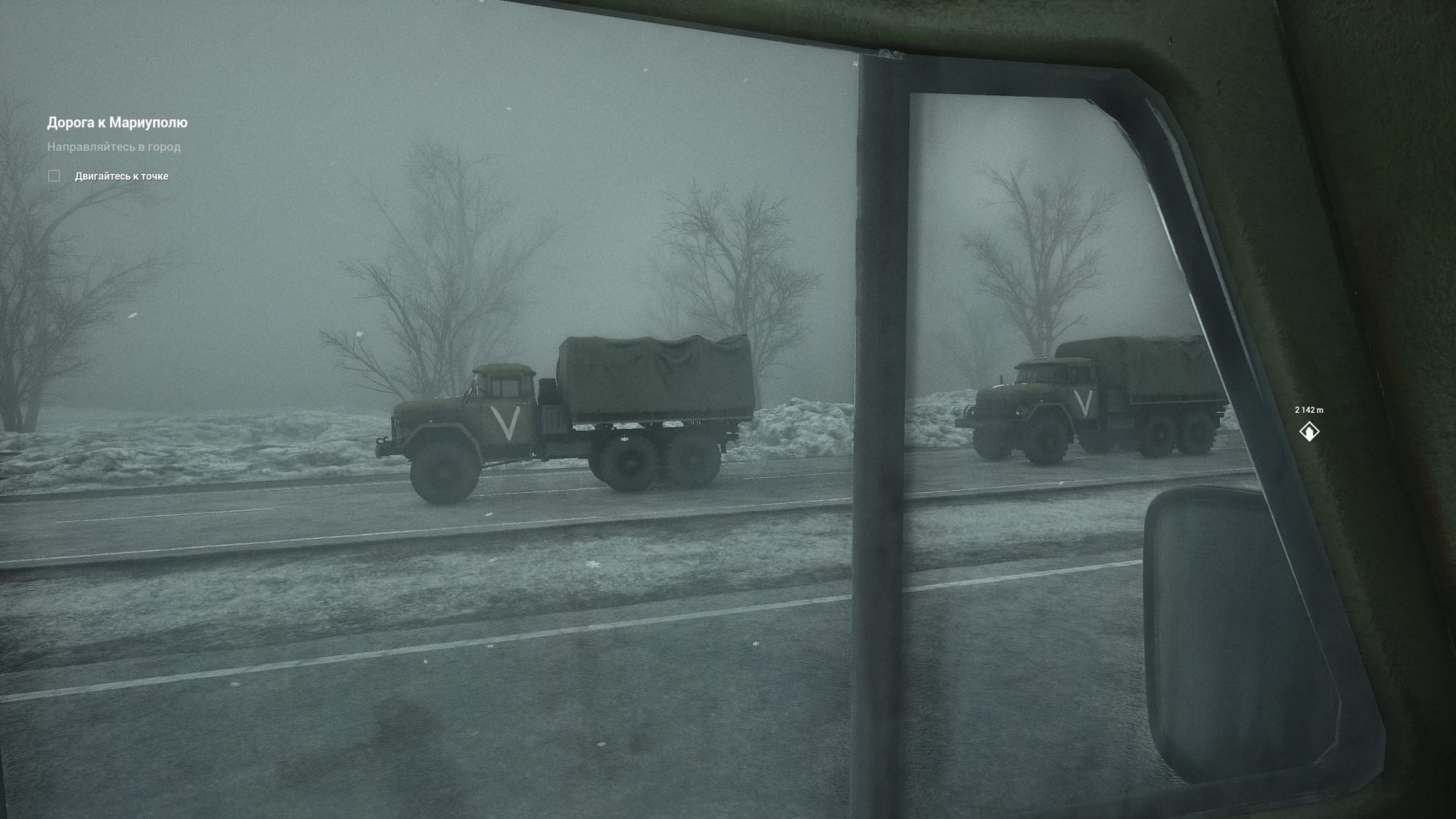
- Donbas becomes the main hotspot, and the destroyed city of Mariupol becomes the setting of the events of the game Kuindzhi, 93.
Not S.T.A.L.K.E.R. or Fallout, But Mariupol
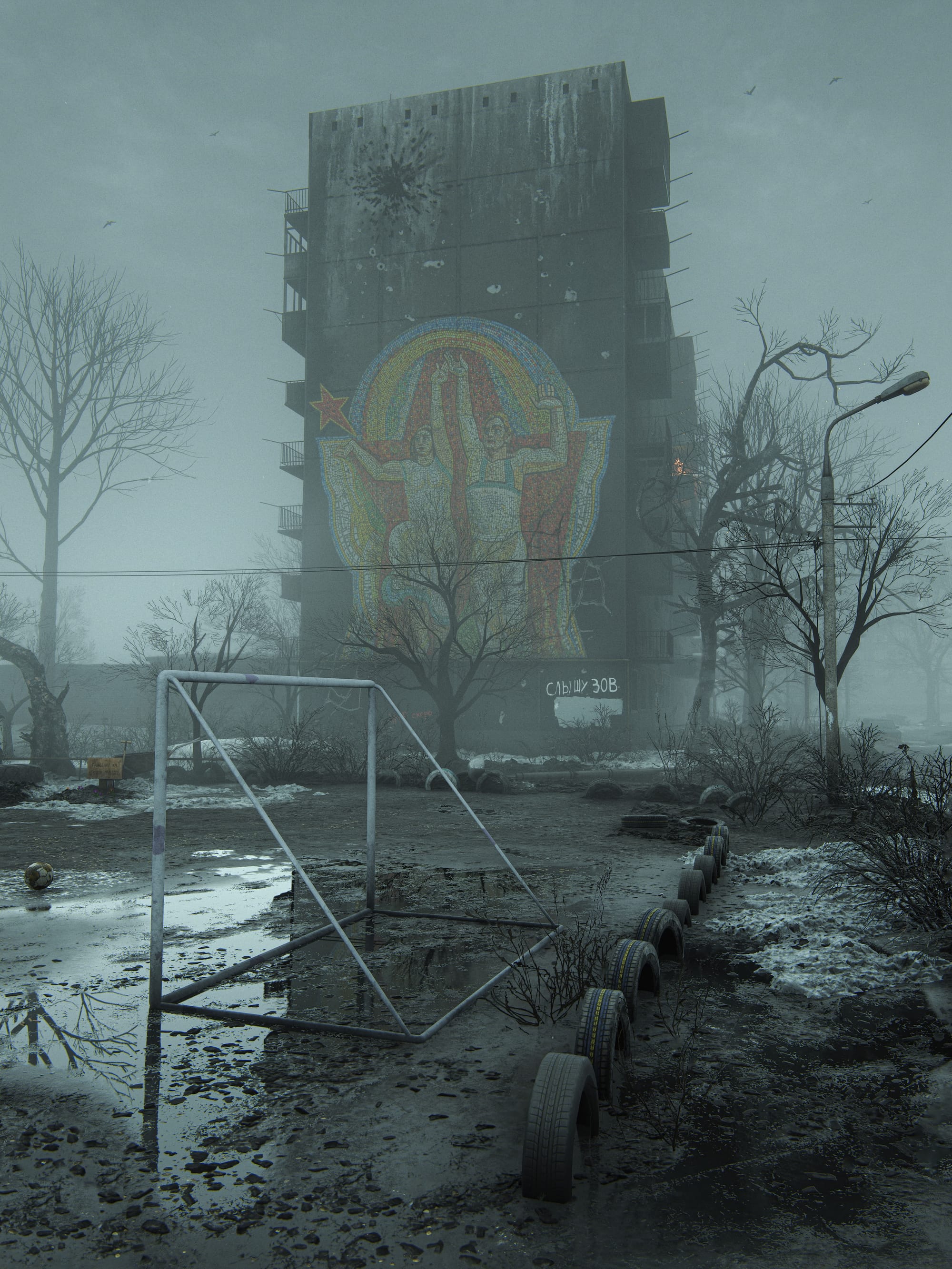
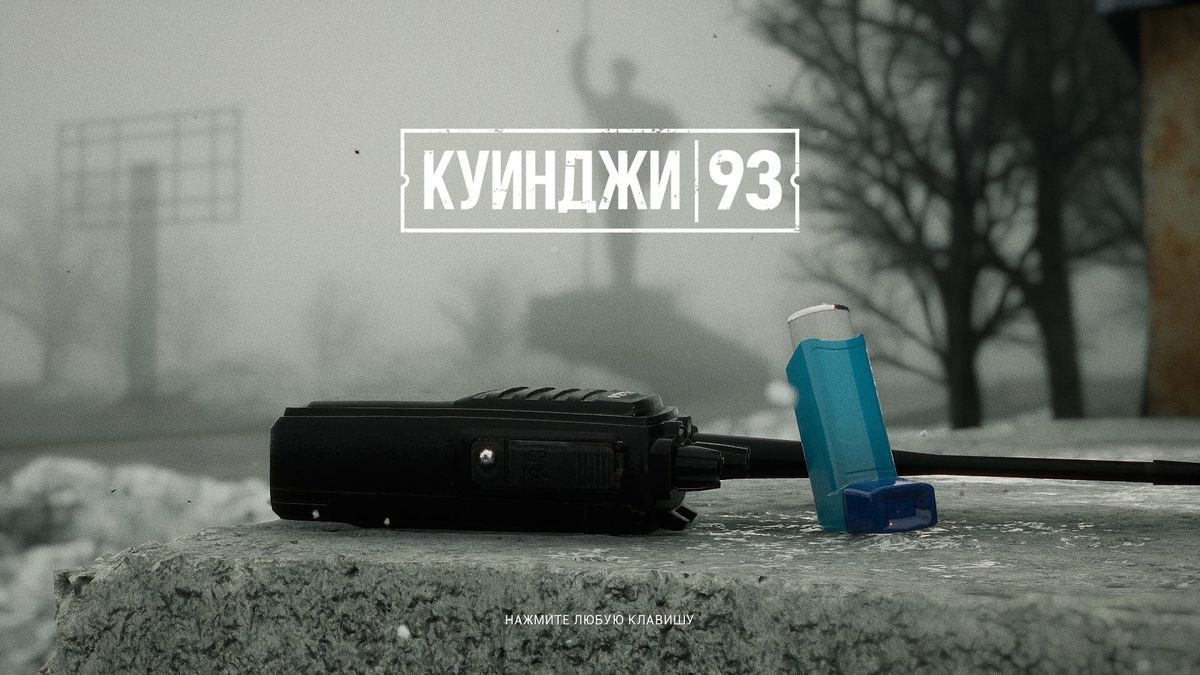
The physical reality forged by this extended conflict is made brutally manifest in the game's setting. The sound of howitzers may be distant, but the unrelenting repetition serves as a prime catalyst for distress - a constant reminder of the local circumstance. 93, Kuindzhi achieves an eerie excellence at placing the player directly in the desolate wasteland which was once a bustling city. Here, existence is suspended, punctuated only by the impact of descending ordnance. Artem operates alone, anchored solely by a walkie talkie that offers sporadic, albeit comforting, communication. His primary liaison, designated by the callsign "Bear," is voiced by a familiar fighter from Donbas. Overall, it provides an optimal environment for atmospheric immersion. Foliage rustles in the wind, the barks of dogs echo from nearby, the snow crunches beneath Artem's feet. Occasionally he coughs, or uses his inhaler, while a somber piano score maintains the emotional equilibrium, yielding only to infrequent rap sequences while Artem is traveling in his van.
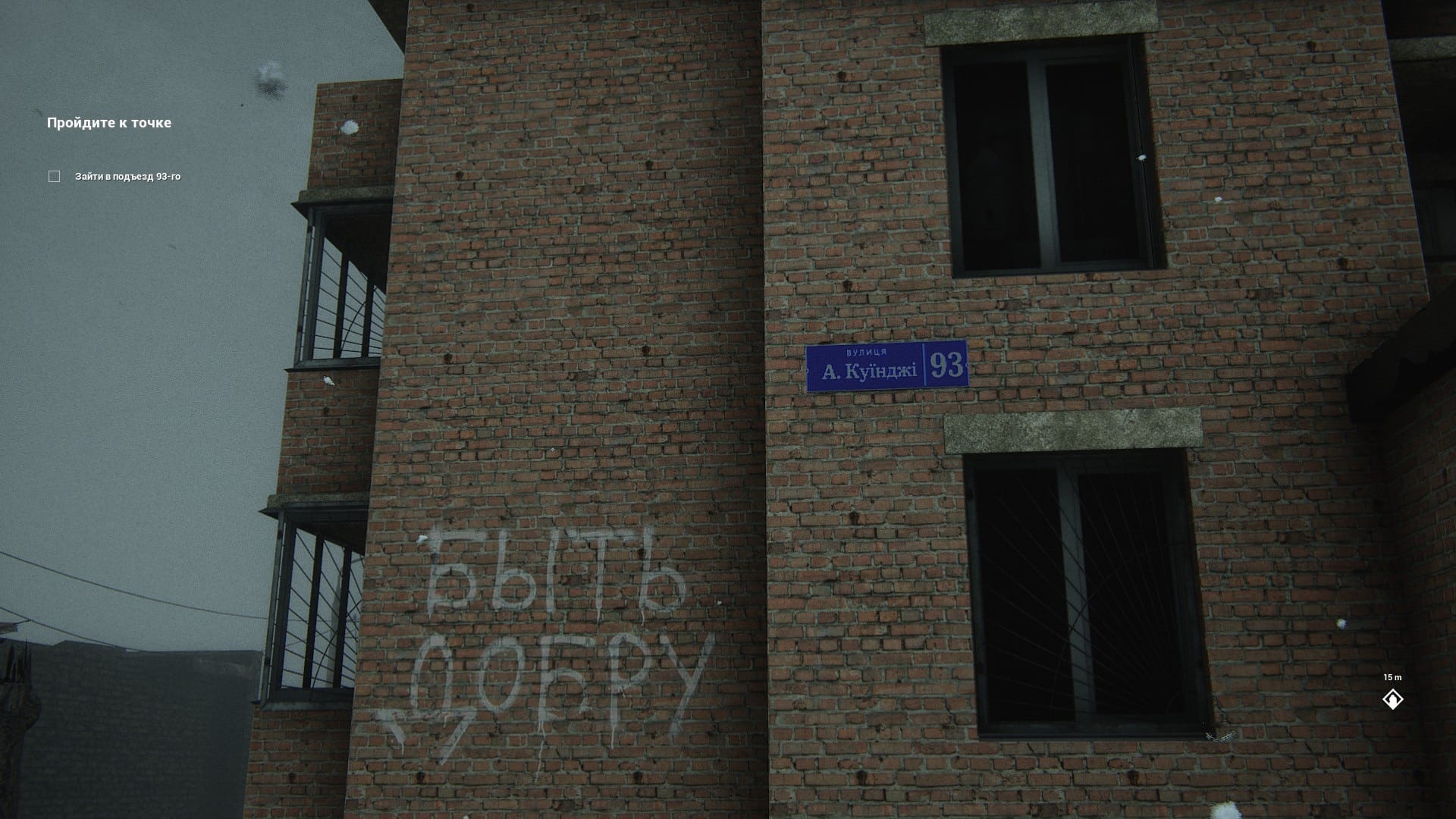
From a technical standpoint, the utilization of Unreal Engine facilitates a stable and highly photorealistic presentation of environmental assets and props. One of the most notable aspects being the water physics of waves hitting the shore in the latter part of the game. Where it really shines is in the second chapter as you enter the city block. Familiar yellow gas pipes line the architecture and abandoned cars are strewn across the streets, along with the carcasses of tanks and APCs on the roadside. Everywhere you look there are piles of garbage and the terrain is scarred by asphalt craters. The apartment complex where you must search for a survivor is largely intact, though it is riddled with bullet holes and fires can be observed burning inside through some of the windows. A beautiful Soviet-era mosaic persists on the facade, acting as a historical relic of a preceding epoch. Another grim focal point here is the playground, which has become a makeshift graveyard for the local residents. Death circles the location in the form of crows, especially above your main destination; building 93. Still, graffiti near the entrance reminds us to be kind.
The interior spaces avoid being mere aesthetic background; they possess a distinct lived-in quality, signifying the former domesticity of ordinary citizens. Once the homes of the common man woman and child, these dwellings are inhabited only by strays such as the cat heard meowing near the elevator, which Artem seems drawn to. His fixation on the animal suggests a psychological yearning to replicate the pet rescue efforts of his adolescence as a fragile attempt to reclaim at least some agency.
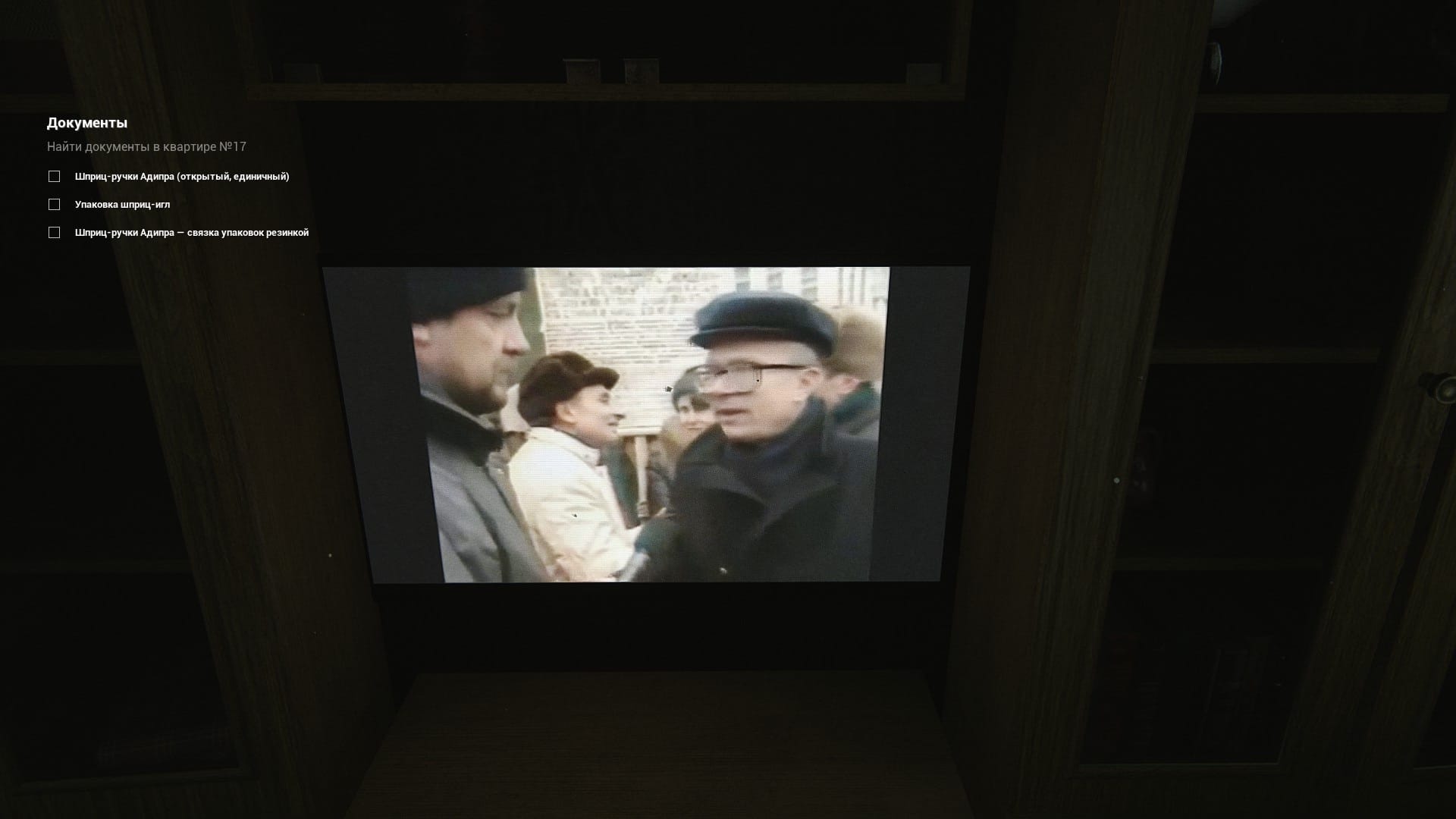
A significant inclusion on one of the televisions is a historical broadcast featuring the author and political figure Eduard Limonov. While the segment lacks subtitles, it offers a crucial predictive analysis regarding the regional trajectory. I strongly recommend pursuing a translation of this dialogue, as it provides the essential historical grounding and causal reasoning necessary to fully contextualize the current narrative arc.
Who Are You, Really?
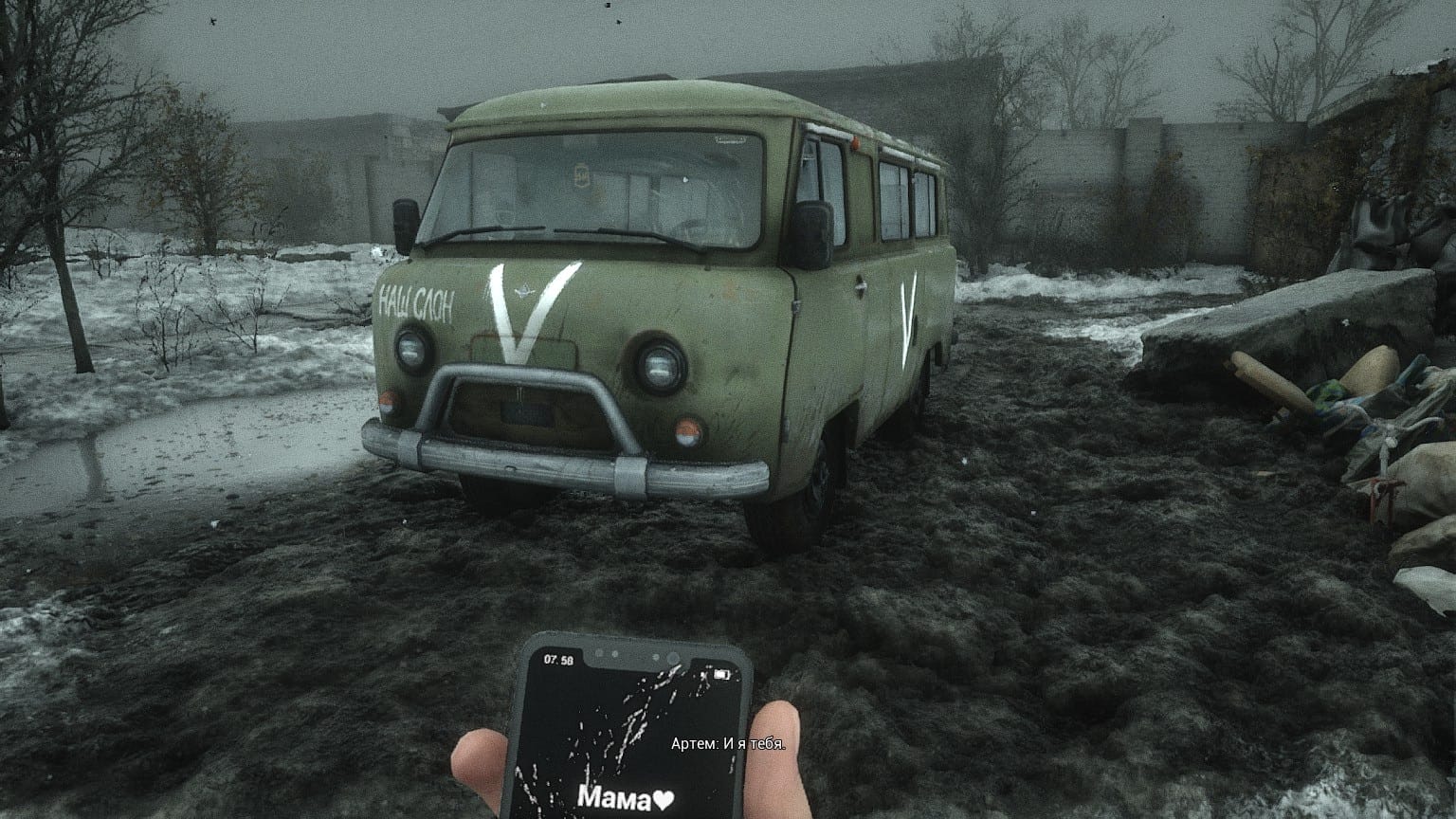
We assume the role of Artem, an 18-year-old who volunteers to provide aid to the people of Mariupol after his father is drafted in March of 2022. He would have been the age of ten during the onset of the conflict. A normal kid, going through adolescence in an abnormal environment. He does everything along with best friend Igor. They abide by rules, because order is fairness, and that gives the illusion of safety. They roleplay as volunteers saving a neighbor's cat because that is just and right. Unfortunately, when they join the real cause, Igor doesn't make it. This outcome, while tragic, is presented as a sober reality for those operating in the volunteer sectors.
Though the first-person perspective renders Artem physically faceless, he remains a vocal presence throughout the narrative. Portrayed by the artist Husky, the protagonist’s internal monologue highlights a specific existential paradox: he remains non-combative, yet the psychological weight of his existence persists. He never picks up a gun, he never hurts another person.. or does he? The pain we inflict on others is not always intentional, nor is it immediately obvious. His mother, already mourning a husband she considers lost, views his participation as an unnecessary sacrifice. She further underscores his physical vulnerability, noting his reliance on an inhaler, a consequence of exposure to phosphorus during earlier hostilities. The origin of this chemical trauma remains unspecified, reinforcing the project’s focus on the victim’s reality over partisan blame.
Despite these tensions, a deep-seated filial bond remains; Artem offers standard reassurances of safety, though his commitment to individual duty remains absolute. His cracked phone screen, displaying a contact saved simply as "Mama" with a heart icon, serves as his final point of normalcy before he resumes next supply run.
Bearing The Brunt of Responsibility
The scripture in Proverbs 26:13 observes:
"The sluggard says, 'There is a lion in the road! There is a lion in the streets!'"
This biblical passage serves as a satirical commentary on the human tendency to manufacture extreme justifications for avoiding hard work and responsibility, thus allowing fear to keep them in their comfort zone. Our protagonist, however, acknowledges the literal lion yet systematically ignores the internal monologue suggesting the futility of his mission and finds a justification to act despite the fear. Following his father’s conscription in March 2022, Artem finds himself suspended between paralyzing apprehension and an ill-defined sense of obligation. Deciding to leave his studies and volunteer in Mariupol is not rooted in a clear ideological conviction, but in a diffuse need to do something, to be on the same side of the disaster as his family, even if he does not know what that “doing” will look like. This ambiguity is crucial since he is not a freedom fighter, not a convert to a cause, but a teenager trying to avoid the unbearable feeling of being a passive spectator while his entire world burns. The game’s narrative frames this as a moral crisis rather than a tactical one, emphasizing that another front on the battlefield is inside his mind, not only on the streets of Mariupol.
Artem’s inner turmoil is structured around several overlapping psychological layers. First, there is classic survivor‑guilt: he has not been conscripted, yet he remains free to move, to think, to hesitate, while others such as his father, his neighbors, his city, are already locked into extremes of risk and violence. This produces a chronic self‑scrutiny as he is constantly evaluating his own fear as if it were a moral failure, asking himself why he trembles, why he hesitates, why he cannot simply “step up.” Second, there is moral injury; he volunteers in a war zone but never takes up a weapon, which places him in the liminal space between participation and withdrawal. He experiences the consequences of war such as destruction, loss, trauma, but avoids the formal role of perpetrator; and yet, in the logic of his conscience, mere presence counts as complicity. Third, his condition suggests elements of dissociation and hypervigilance common in prolonged exposure to shelling and urban warfare: time blurs, memories intrude into the present, and the ambient gunfire becomes both a backdrop and a constant trigger, as if his mind is refusing to let him relax into any moment until the war is over. He does not narrate his distress loudly; instead, it leaks out in small, repetitious gestures while he is checking his phone, pausing at windows, flinching at distant explosions, all signs of a mind that knows it should react, but does not know in what manner.
Philosophically, Artem represents the total reconfiguration of civilian moral frameworks under the pressures of war. Pre-war, his “duty” might have been defined by school, family, or local identity; now, those markers are suddenly obsolete or inverted. The game insists that he must “answer not to the world, but to himself,” which turns the war into a private moral trial. In this sense, Artem becomes a miniature case of existential responsibility: he did not create the war, yet he now bears the weight of each decision made within it. His refusal to take up a weapon is not simply a practical choice as much as it is a psychological refusal to fully inhabit the role of “combatant,” even as he accepts the psychological consequences of being close enough to the front to feel the shockwaves. The game uses this tension to interrogate the myth of “heroic” participation in war. Artem does not die in some dramatic, redemptive moment; he survives, but must live with the knowledge that his survival is entangled with guilt, fear, and the memory of choices left incomplete. In this way, 93, Kuindzhi stages a clinical‑psychological portrait of one young man while also making a broader philosophical claim about the war’s impact on regular people. Not only does it kill or wound bodies, it reconfigures inner lives, forcing otherwise ordinary individuals to live with the weight of questions they never asked to bear.
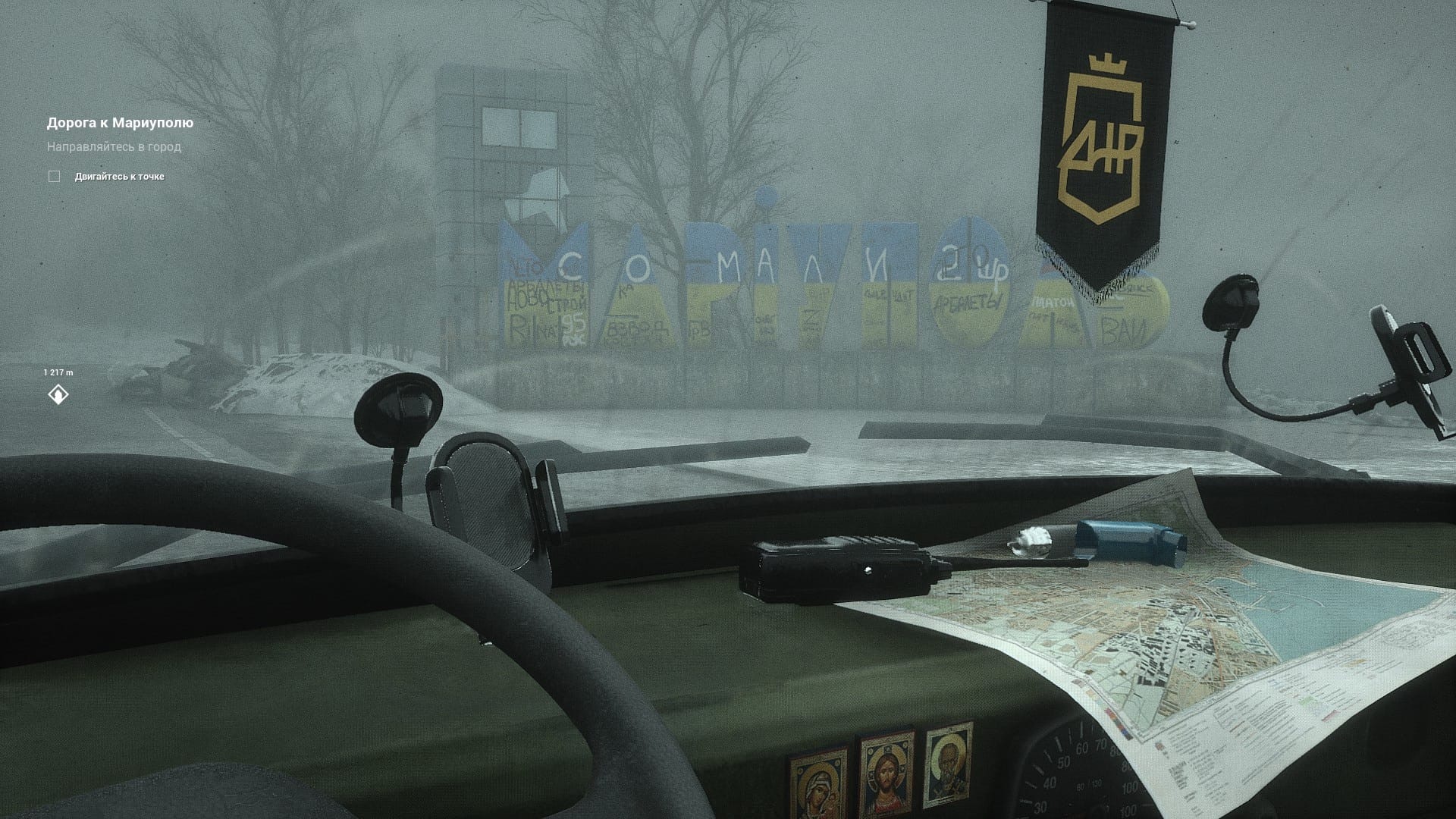
Believer
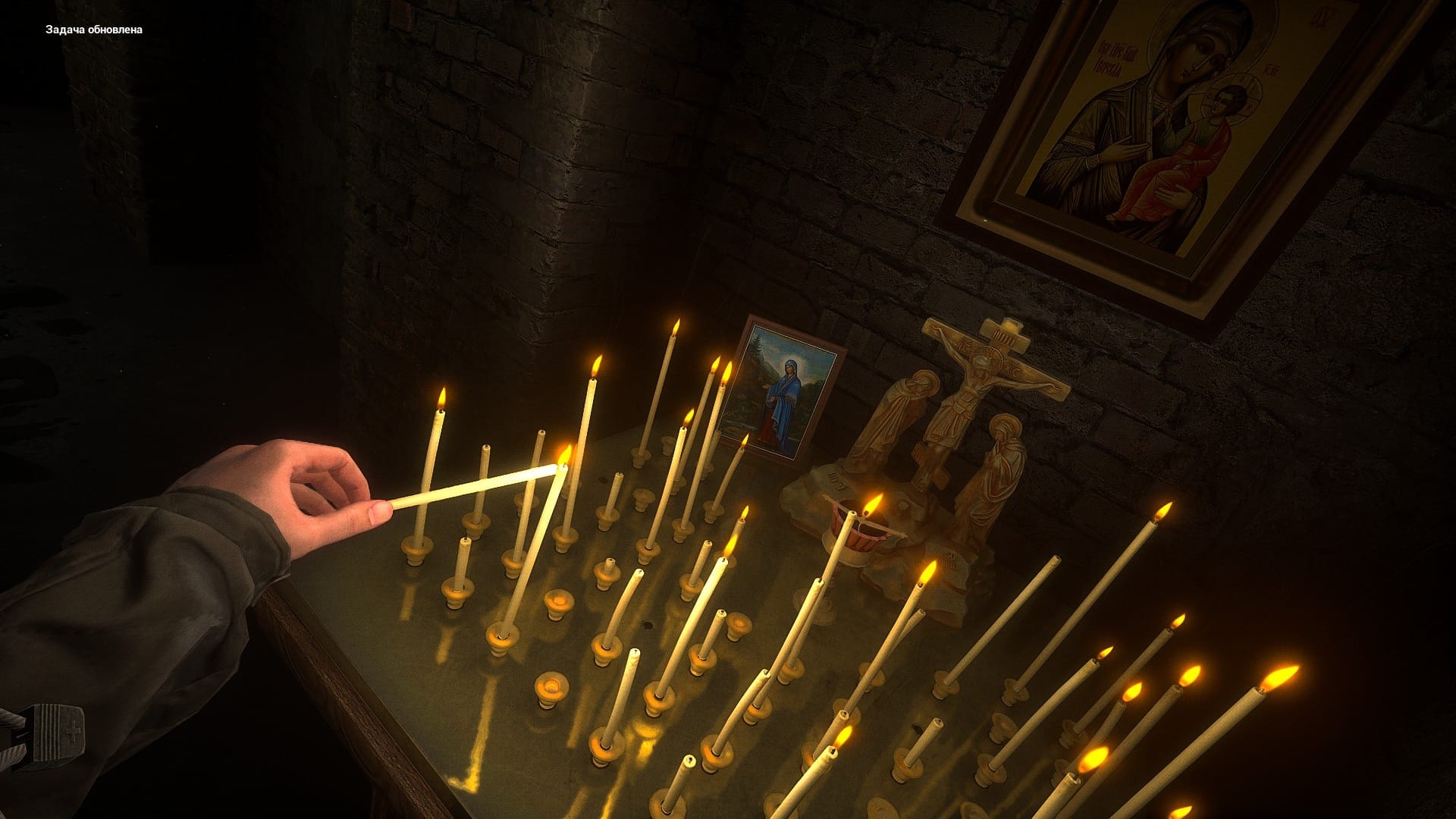
Ultimately, 93, Kuindzhi offers no resolution, presenting instead a series of unresolved questions suffered by Artem and crystallized within that of the church. This space of "confession-without-a-priest" is the game's final thesis: that the war is not just tearing apart cities, but the very fabric of moral and spiritual life. Artem’s hesitant journey, marked by the religious icons on his van and the silent, half-desecrated church before him, embodies the ultimate fracture. For ordinary people in Donbas, Orthodoxy is a primary cultural signifier of identity and belonging, yet this tradition is shown to be devastatingly split, pulled between hierarchies that bless the conflict and other voices that condemn it as a sin. Artem, caught in this crossfire as a non-combatant volunteer grappling with survivor-guilt and moral injury, is left to inhabit a space where his personal faith remains an anchor, even as the broader spiritual structure crumbles around him. The game’s real power lies in showing how war forces an ordinary young man to carry the weight of a monumental, global crisis, making his private conscience the last, quiet front line. It is a beautiful portrait of a soul surviving, but indelibly reconfigured, and forced to live with the knowledge of choices left incomplete.