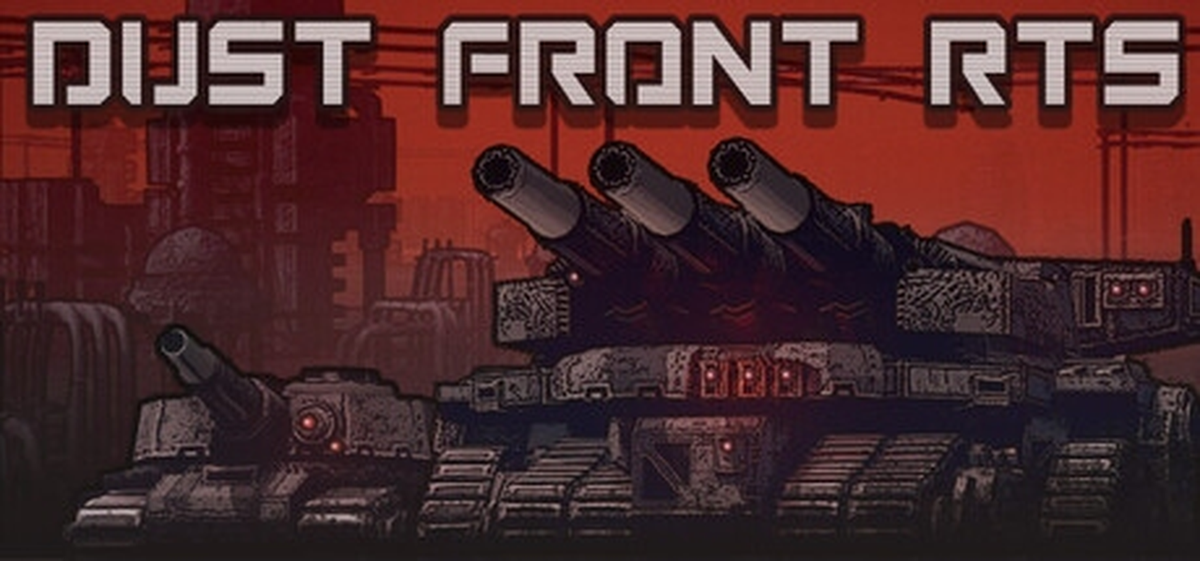
Dust Front RTS: The Solo-Developed Grimdark RTS That's Been In The Making For Nearly 10 Years Gets Its First Public Demo
If you've ever wished for a game that combines the grueling RTS combat of Command & Conquer with the grand strategy depth of Dawn of War: Dark Crusade and the atmospheric grimdark of Warhammer 40K - Dust Front and is worth your attention.

Developer Spotlight: The Solo Dev Behind Dust Front
Name: Dmitry "rtsDimon" Charankov
Location: Chelyabinsk, Russia
Development Timeline: ~2016–present
For nearly a decade, Dmitry has worked on Dust Front without corporate deadlines, publisher pressure, or even a team. His public-facing channels have been focused on development updates and gameplay reveals rather than polished marketing. For most of that time, there was no public demo, partly because the developer believed the project was hard to represent in a short vertical slice without misrepresenting what the full game was trying to do.
This is the kind of development story that still turns heads in strategy circles. In an industry where RTS games are usually built by larger teams with clearer commercial pipelines, Dust Front represents a more stubborn and personal model: one person's long-term attempt to build a heavy single-player strategy game that does not feel compromised.
On a broader level, that makes this more than a normal indie strategy launch. It is also a reminder that some of the most interesting RTS ideas still come from developers willing to spend years solving design problems that larger studios would often cut for scope.
What Is Dust Front RTS?
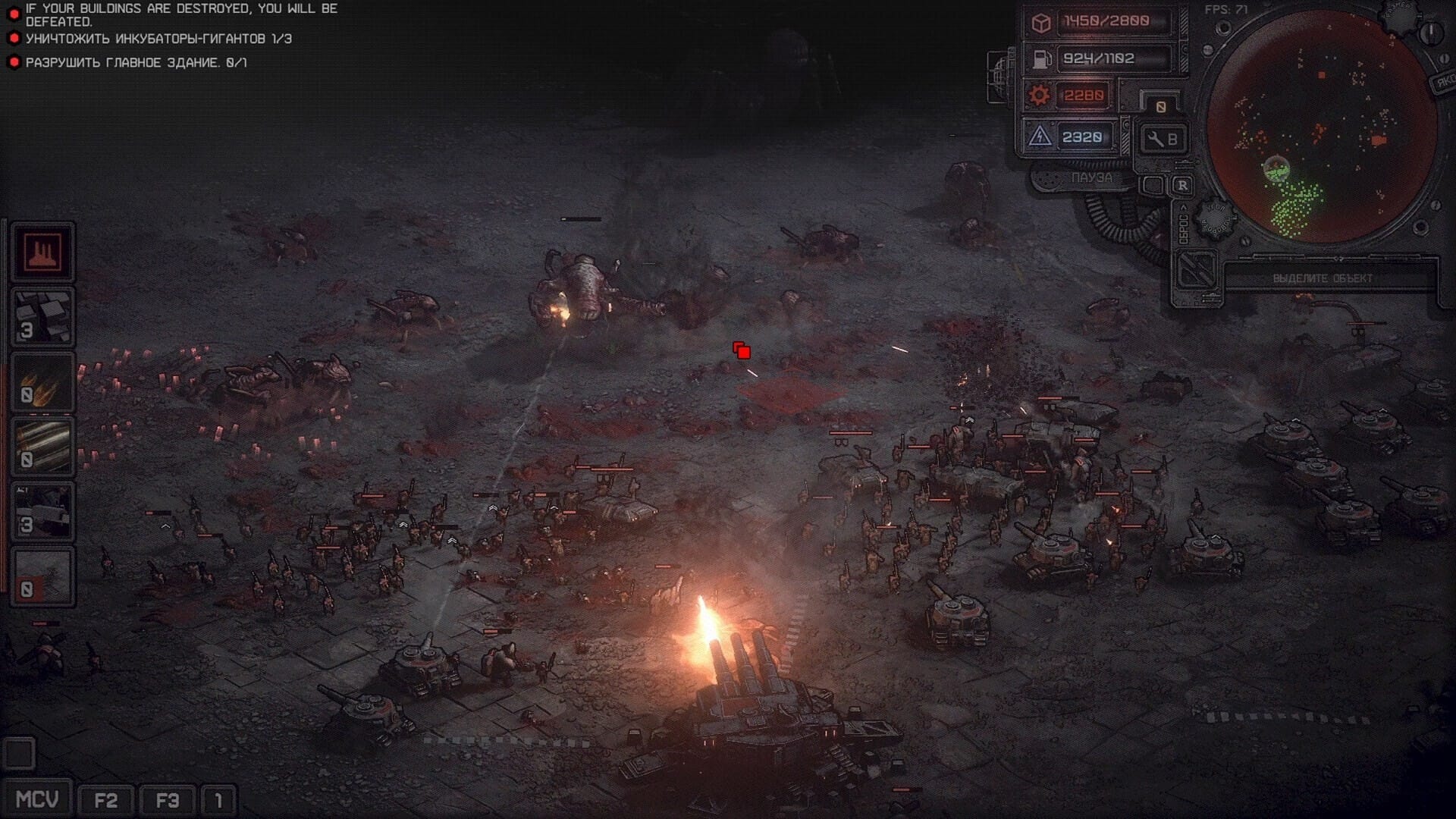
At its core, Dust Front is a classic RTS with grand strategy and 4X elements, set in a dead industrial world buried under soot, concrete, and the leftovers of past wars.
That pitch matters because the game is not trying to be just one thing. The battlefield layer is built around classic RTS fundamentals: base building, resource gathering, unit production, combined-arms clashes, and the usual pressure between macro control and tactical execution. But layered on top of that is a broader strategic structure involving territorial control, garrisons, strategic buildings, tech progression, and campaign continuity.
The Two-Layer Gameplay System
RTS Layer (Combat): Traditional base building, resource extraction, infantry and vehicle production, battlefield positioning, and large-scale assaults.
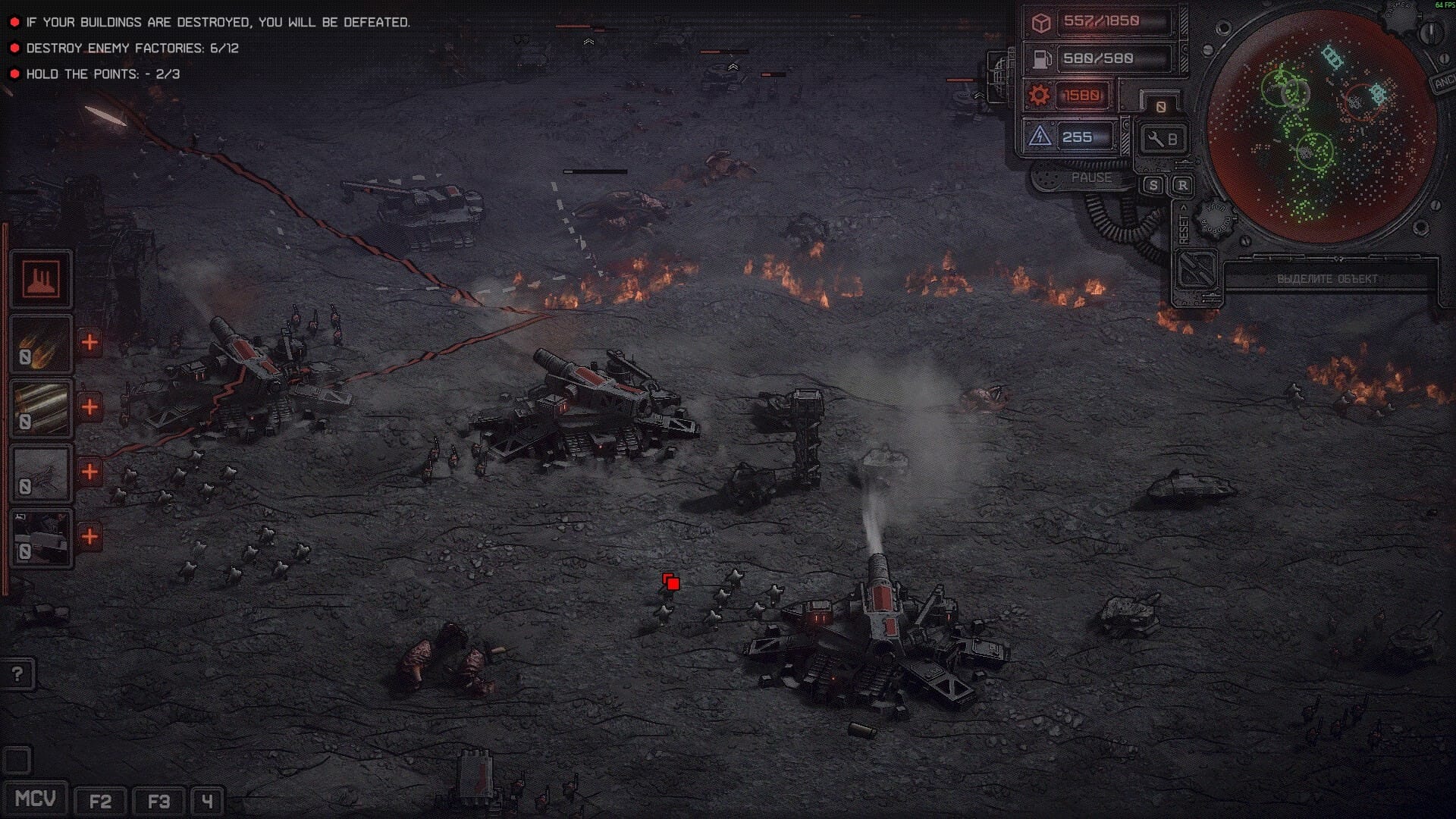
Grand Strategy Layer (Global Map): A tile-based map where you manage regions, engage with events, move forces, build out strategic structures, and plan actions before battles begin.
The simplest comparison is Command & Conquer combat framed inside a campaign structure closer to Dawn of War: Dark Crusade, but with stronger grand-strategy ambitions. That hybrid identity is the game's central hook.
The Factions
| Faction | Description | Combat Style |
|---|---|---|
| Industrial Empire | A ruthless regime of synthetic humans led by the Tsar-Orb | Heavy firepower, discipline, armor |
| Mutant Faction | Horrific heavy units, worms, flies, and close-range pressure | Brutal assaults, heavy armor, aggression |
| Robotic Escalation | Ancient machines using advanced technology to purge organics | Precision, advanced tech, machine warfare |
| Bandit Faction | A starting faction operating in the gray zones of the global map | Light, fast units and opportunistic pressure |
The worldbuilding is one of the game's biggest strengths. Dust Front has a strong grim-industrial identity, and unlike many indie RTS projects, it does not feel visually or tonally interchangeable. The factions are legible at a glance and thematically pointed in a way that should appeal to players who miss oppressive sci-fi strategy worlds.
Technical Note for Strategy Veterans
For players with deep RTS habits, a few design choices stand out immediately:
- Directional armor makes positioning more important than in most classic base-building RTS games.
- Strike groups make reinforcement timing part of strategy instead of a pure production race.
- Persistent units and garrisons give the campaign more continuity than a mission-by-mission structure.
- Procedural systems suggest replay value will come from interacting mechanics, not only faction choice.
These are the kinds of systems that could make Dust Front feel meaningfully different even to genre veterans who have seen dozens of retro-RTS pitches already.
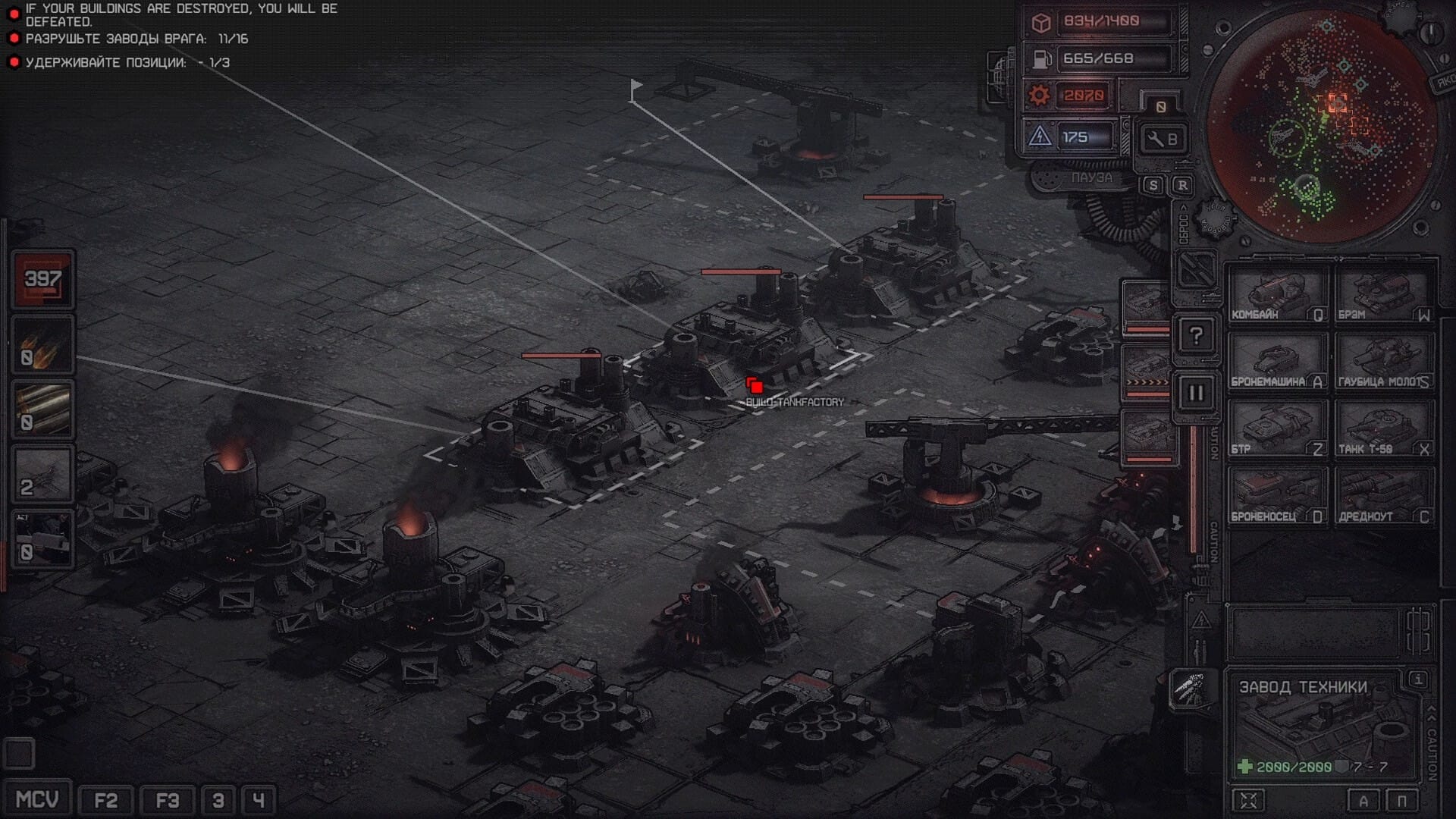
Freeform Base Building
Base building is described as largely freeform, allowing players to shape strongholds and defensive networks based on geography and personal strategic preference.
That matters because base building is often where modern RTS revivals become too rigid or too simplified. Here, the promise is not just that you will build a base, but that your layout can become part of your strategy, especially when dealing with varied terrain and pressure from different enemy types.
Procedural Generation and Systemic Depth
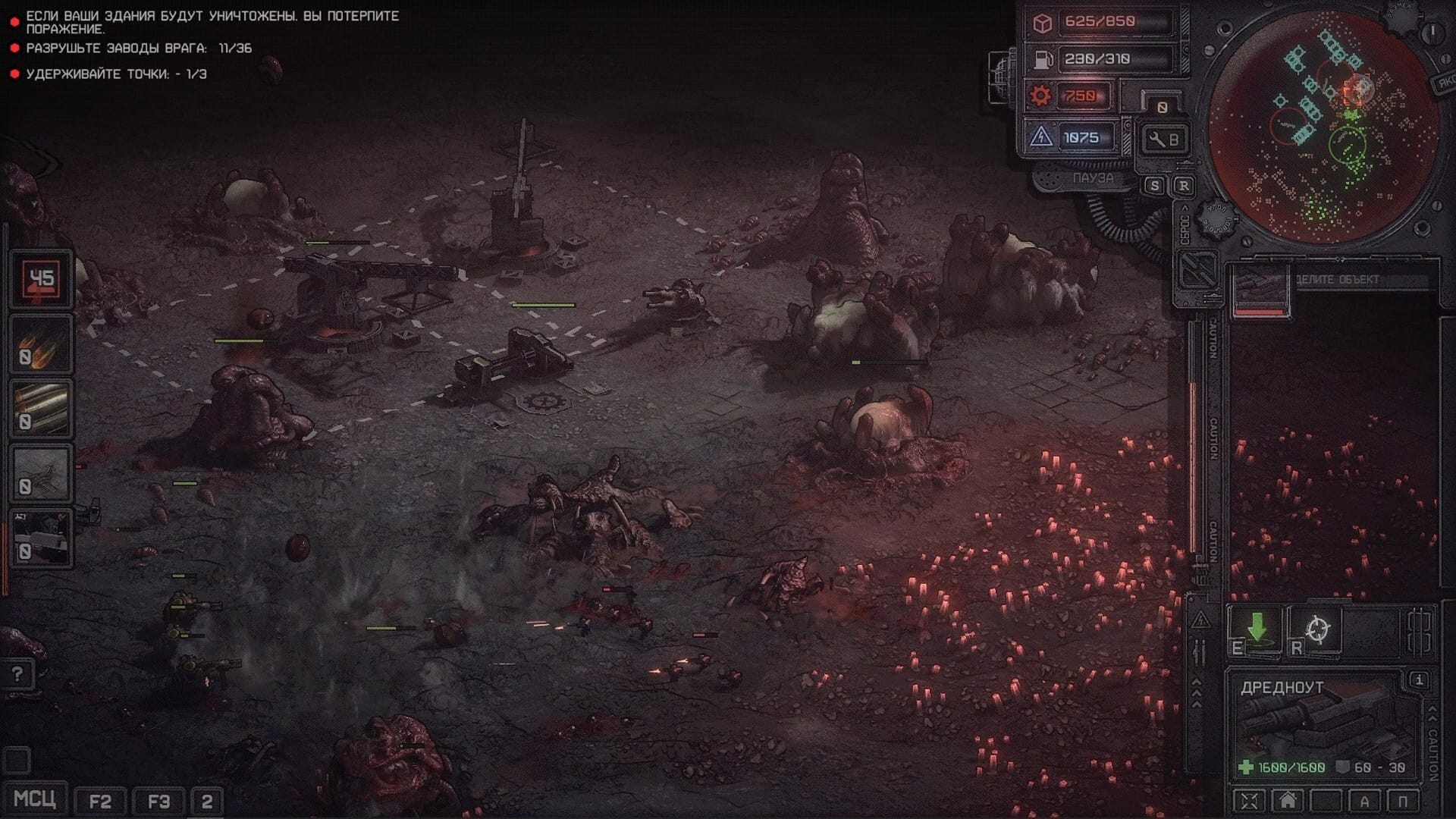
The project includes procedural generation in maps, missions, and campaign structure. In the demo, the mission itself is fixed, but the map changes slightly from run to run.
For casual readers, that means repeat plays are not identical. For more systems-minded players, the more important point is the larger design direction: the developer seems to be aiming for replayability built from interacting campaign rules, events, unit progression, tech decisions, and battlefield conditions rather than from randomization alone.
The game also appears to include environmental interactions such as fire behavior and explosive gas effects. If those systems land well in the full release, they could add another layer of tactical drama that fits the setting perfectly.
Garrisons, Veterans, and Campaign Continuity
A particularly promising feature is that units can gain ranks and carry over as part of strike groups or defensive garrisons.
That may sound small, but it addresses one of the oldest weaknesses of RTS campaigns: the tendency for missions to feel disconnected. Dust Front is clearly trying to make victories, losses, and force preservation matter across a larger war, which is exactly the kind of structural thinking strategy fans have wanted more of for years.
Mechanics Deep Dive: How Dust Front Differs from Genre Classics
| Mechanic | Dust Front | Command & Conquer | Dawn of War | StarCraft II |
|---|---|---|---|---|
| Directional Armor | Front/side/rear | No | Partial armor classes | No directional |
| Strike Groups | Yes (RTS + global) | No | Limited (reinforcements) | No |
| Procedural Campaign | Yes (missions + maps) | No | No | No |
| Squad Health | Survivability without DPS loss | No | Yes (with DPS loss) | No |
| Garrisons | Veterans carry across battles | No | Yes (experience) | No |
| Non-Linear Campaign | Yes (6–8 hours) | No | Yes | No |
This is where the game becomes more interesting than a generic throwback. It uses recognizable RTS language, but several of its systems aim at a more persistent, campaign-driven war game rather than isolated skirmishes.
One of the most intriguing systems is the strike-group structure. When moving into a neighboring sector on the global map, part of the army enters the battlefield immediately while the rest arrives later as reinforcements.
For casual players, that means you are not just spawning everything at once and rolling forward. You are trying to survive, position, and build momentum while the rest of your force comes online. For RTS veterans, it suggests a much tighter connection between campaign planning and battle pacing than most hybrid strategy games achieve.
Directional Armor and Squad Logic
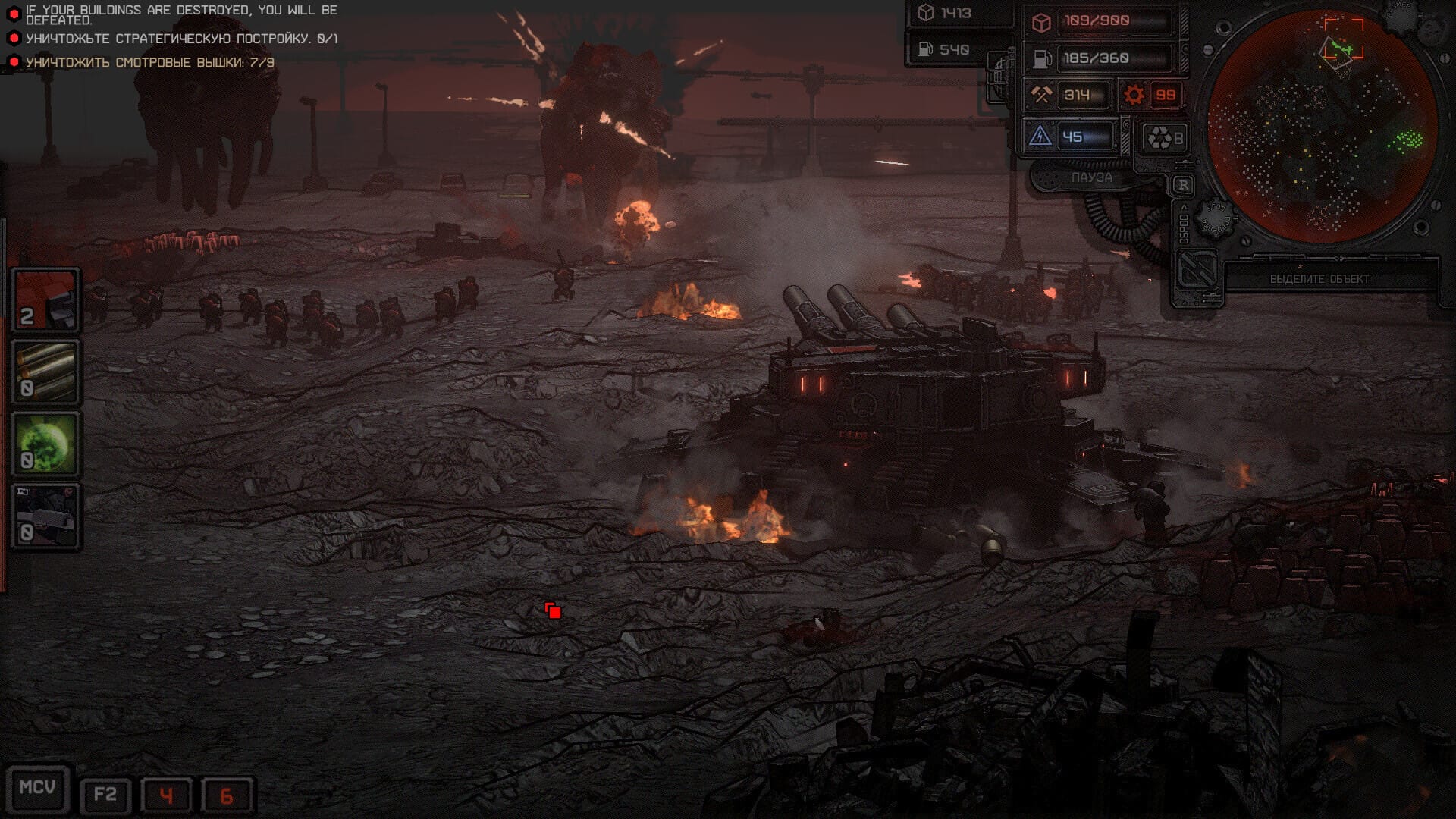
The game also leans into tactical readability. Vehicles use directional armor, so facing matters. Infantry squads appear to work as coherent units where survivability and squad composition influence battlefield behavior without flattening everything into a simple DPS race.
That may sound like a small detail, but it changes how fights feel. A badly positioned tank column can get punished from the flank, and squad handling starts to matter more than simply pumping units into a lane.
A Single-Player RTS By Design
The campaign is non-linear and the developer has been explicit that the game is not built around multiplayer. That is not a missing feature so much as a statement of intent.
In a genre where many releases either chase esports relevance or add multiplayer because convention demands it, Dust Front is making a clearer bet: a replayable single-player campaign with enough systems depth to keep strategy players engaged without relying on online competition.
That choice alone gives the project a stronger identity than many bigger-budget RTS games.
What's In The Steam Next Fest Demo?
The demo focuses on the RTS side of the project rather than the full campaign layer.
Players are dropped into the siege of an industrial city and can fight against two enemy options: the fast-moving Bandit Faction or the heavier, more horrifying Mutant Faction. High-tier doctrines are unlocked, the strike-group and reinforcement interface is present, and the map changes slightly between runs. There is also a scale modifier that lets players increase the size or difficulty of the enemy base.
That makes the demo less of a full campaign sample and more of a mechanics showcase, but it is still enough to communicate the game's identity.
My First Hour Playing the Demo
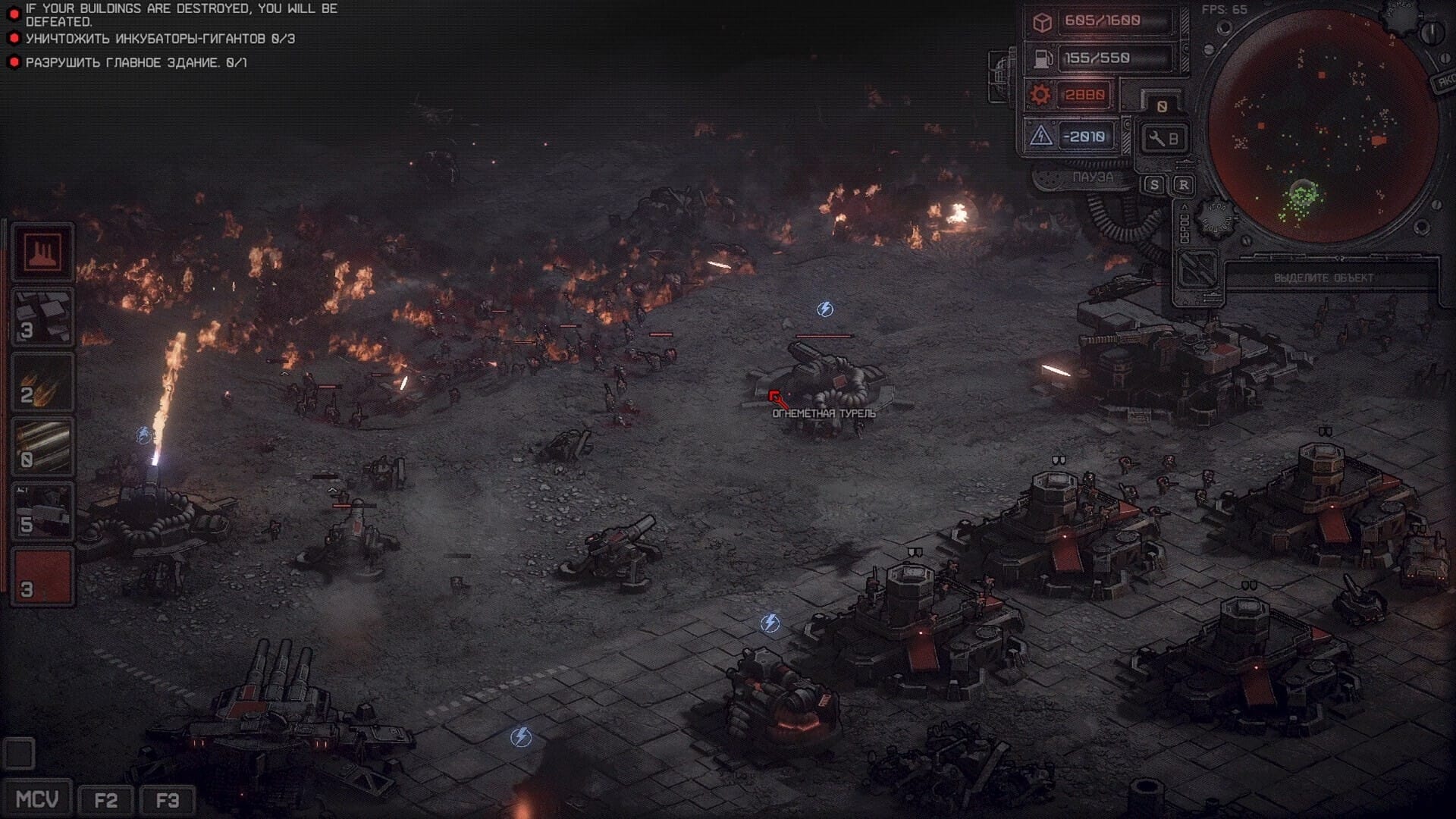
I downloaded the demo right after it went live. What hit first was the atmosphere: an industrial battlefield, entrenched enemy positions, and a pace that feels heavier than a standard skirmish. The Mutant side especially pushes battles into ugly close-range fights, which makes positioning feel tense in a good way.
The biggest surprise was the directional armor. I lost a tank engagement because I exposed side armor at the wrong moment, and that single mistake instantly made the combat feel more tactile than a lot of modern RTS games. On the second run, the changed map layout also forced different decisions, which gave the demo more replay value than I expected from a first public build.
It is not the full game, and it clearly is not trying to be. But it is enough to show that Dust Front has a real mechanical identity rather than just an appealing trailer aesthetic.
Why This Matters in 2026
Dust Front matters because it fills a gap that has been sitting open for years.
There are still plenty of strategy games, but fewer that seriously chase deep single-player RTS campaigns with persistent systems, grim industrial worldbuilding, and base-building combat in the same package. That makes Dust Front interesting not only for players, but also for developers and publishers watching where underserved genre demand still exists.
If the full game delivers on its structure, it will stand as a useful example of something the strategy market still undervalues: players do not just want faster matches or cleaner multiplayer onboarding. A lot of them still want campaigns that feel like wars.
Should You Try It?
Yes, especially if you want a strategy game that seems interested in more than surface-level nostalgia.
The current demo is free, mechanically distinctive, and already strong enough to show why people have been watching this project for so long. It also helps that the game does not look like it is trying to chase every trend at once. It knows what audience it wants: players who miss dense, moody, single-player RTS design.
If that sounds like you, try the Steam Next Fest demo and wishlist the full game. There is still no final release date, but for the first time in years, Dust Front feels tangible.
Quick Comparison: If You Like X, You'll Probably Like Dust Front
| You Like | Try Dust Front For |
|---|---|
| Command & Conquer | Classic RTS combat with heavier campaign systems |
| Dawn of War | Grimdark atmosphere and campaign structure |
| Total War | Strategic layer linked to battlefield action |
| Warhammer 40K | Industrial sci-fi mood without the official license |
| Single-player RTS games | Persistent systems and no multiplayer pressure |
System Requirements and Language Support
The official minimum requirements are modest: 64-bit Windows, an Intel i3-3250 or equivalent, 4 GB of RAM, a GeForce GTX 1050-class GPU, and 2 GB of storage.
Links: